JIAH Group
·
Published
Technical review:
Ningbo Pretty Legal Team
China Manufacturer vs Trading Company: 7 Steps to Verify Your Supplier
Before paying a deposit to a Chinese supplier, verify whether you are dealing with a real manufacturer or a trading company. This checklist covers business licenses, factory addresses, production capability, live video tours, third-party audits and the warning signs buyers should check before placing an OEM or private-label order.
China Manufacturer vs Trading Company: 7 Steps to Verify Your Supplier
Before paying a deposit to a Chinese supplier, verify whether you are dealing with a real manufacturer or a trading company. This checklist covers business licenses, factory addresses, production capability, live video tours, third-party audits and the warning signs buyers should check before placing an OEM or private-label order.
Technical answers are easy to forward.
Ask a supplier about machinery, formulation, lead times or production capacity, and a knowledgeable salesperson may return with a convincing answer within an hour. The answer may be accurate—but it does not tell you who operates the production line, who can approve a change, or who will accept responsibility if the finished goods fail inspection.
This is why identifying a factory is not simply a matter of asking more technical questions.
Every question can be forwarded. What buyers need to verify is harder to forward: decision authority, documented ownership and contractual liability.
What is the difference between a trader and a manufacturer?
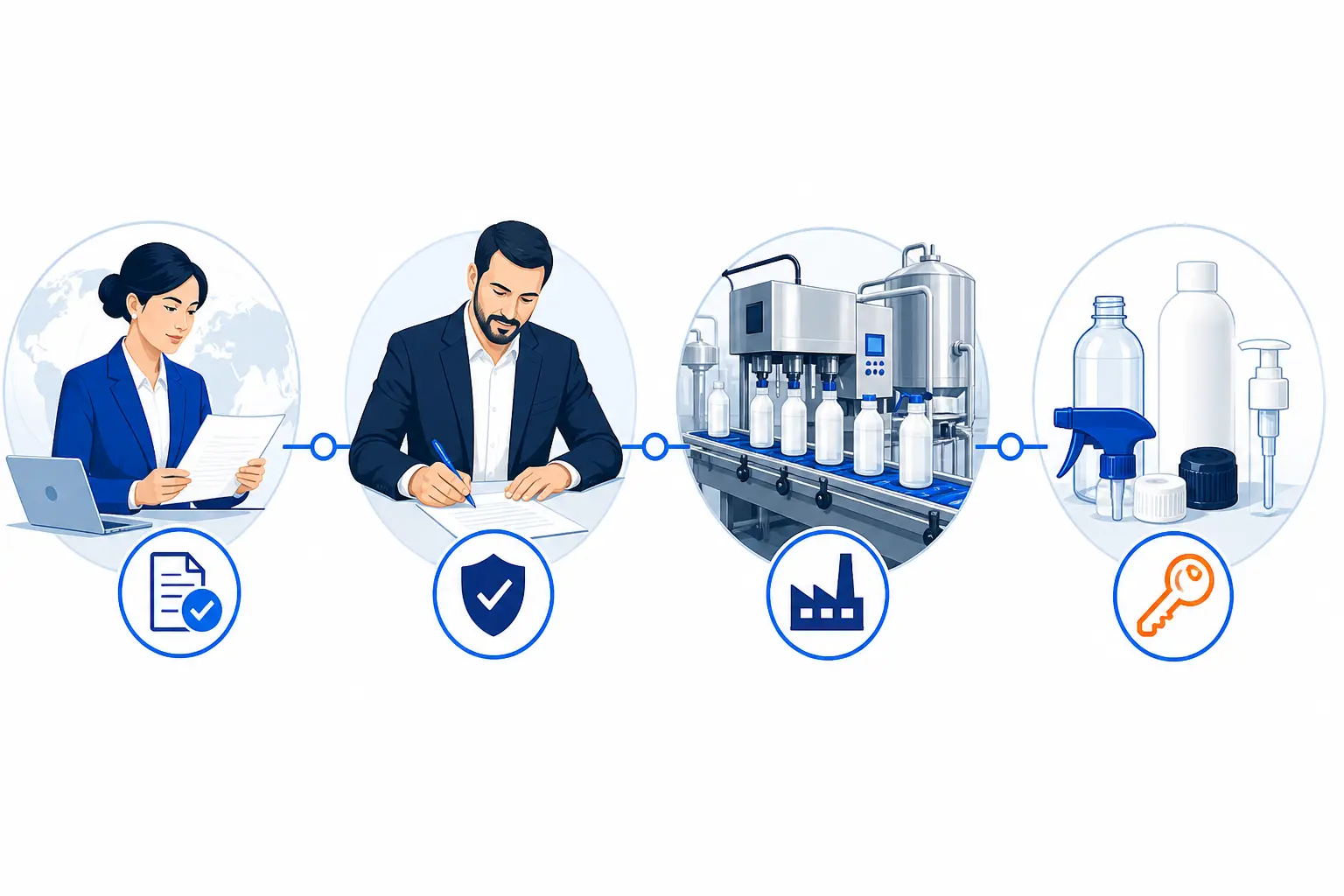
A manufacturer operates the facilities and processes used to make the product. A trading company purchases from one or more manufacturers and manages the commercial relationship with the buyer.
Neither model is automatically good or bad.
A capable trading company may provide useful sourcing, consolidation, communication and quality-control services. A factory may offer more direct access to engineering and production decisions.
Problems begin when the commercial structure is unclear—particularly when the company taking the order is not the company controlling production, and nobody has defined who is responsible when something changes or goes wrong.
The practical question is therefore not only:
Are you a factory?
A more useful question is:
Which decisions can your company make, what parts of production do you control, and which legal entity accepts responsibility for the result?
Four questions that reveal the decision chain
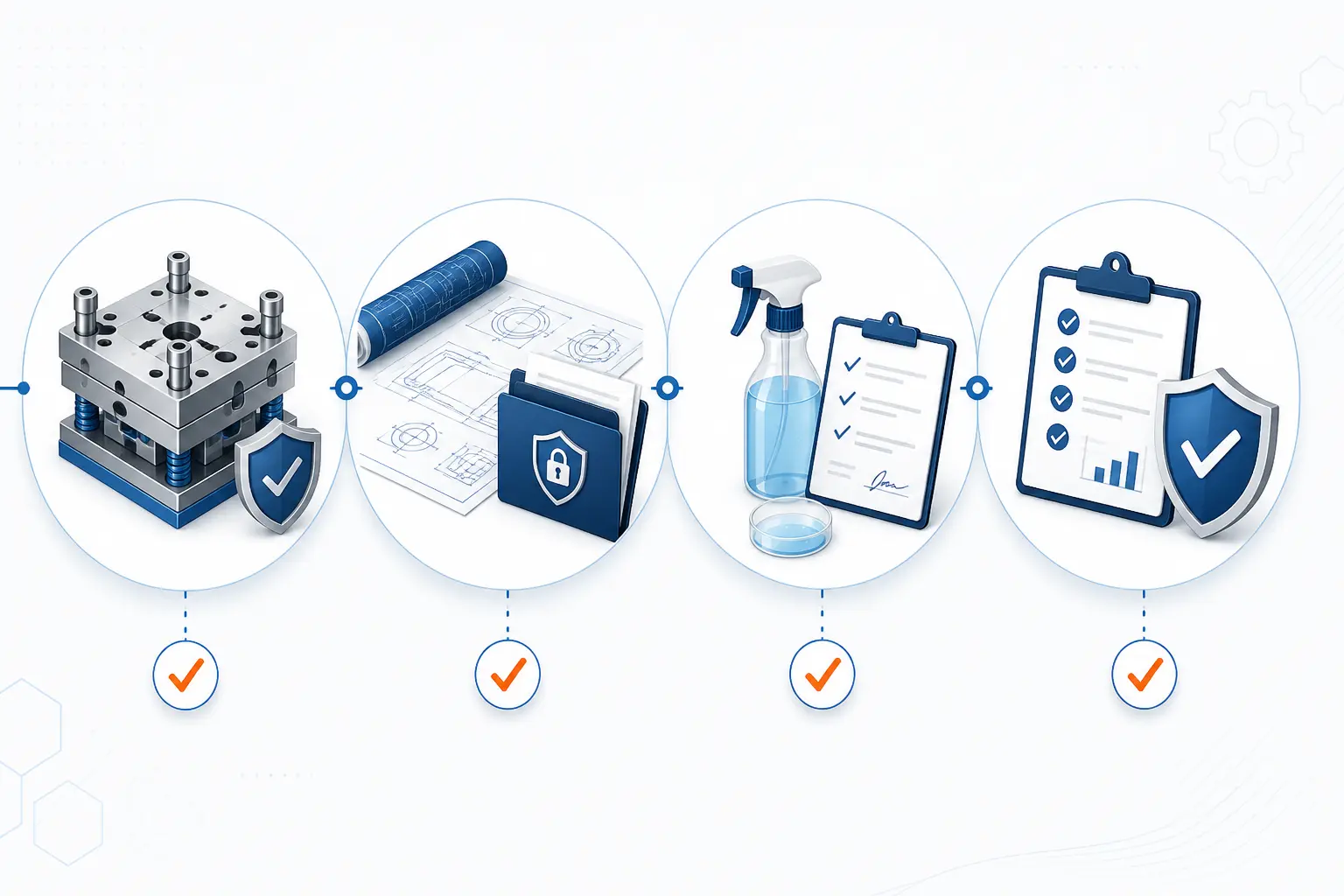
1. Who can approve tooling costs, refunds and changes?
Many custom products require new moulds, packaging components or modifications to existing tooling. A quotation may show the tooling cost, but it may not explain who controls the tooling decision.
Ask:
Who approves the tooling quotation?
Can tooling costs be refunded after an agreed order volume?
Who can authorise a mould modification?
What happens if the mould does not produce the approved result?
Can these conditions be written into the purchase agreement?
The speed of the verbal answer is not the test. The useful evidence is a written tooling agreement that identifies the responsible company, payment terms, modification process and any refund conditions.
A supplier asking for time to confirm a technical detail is not necessarily a warning sign. A supplier refusing to document the commercial arrangement is more significant.
2. Who owns the mould, drawings and product IP?
Paying for a mould does not automatically explain who owns it, who may use it or what happens when the relationship ends.
Before paying, establish:
Who owns the physical mould?
Who owns the product drawings and design files?
May the supplier use the mould for another customer?
Where will the mould be stored?
Can it be transferred to another facility?
What happens to it when production ends?
These points should not depend on an email conversation being remembered two years later. They should appear in a tooling or manufacturing agreement.
Patent and design protection are separate questions. A supplier may assist with applications or documentation, but buyers should confirm ownership and protection requirements with an appropriate legal professional in the relevant markets.
3. Who approves specifications and production samples?
Product development involves a series of decisions: formulation, fragrance, colour, packaging, tolerances, labelling and acceptable variations.
The important question is not only who can prepare a sample. It is who has authority to approve a change and ensure the production batch follows the approved version.
Ask:
Who owns the current product specification?
How are formulation or material changes recorded?
Which sample becomes the approved reference?
Who signs off the final specification before mass production?
How is the approved sample connected to the production order?
What happens if a material becomes unavailable?
For private-label cleaning products, small changes can materially affect fragrance, viscosity, appearance, packaging compatibility or user experience.
A clear approval process reduces the risk of receiving a production batch that is technically “similar” but commercially unacceptable.
Useful evidence may include a dated specification, an approved sample, signed artwork, revision records and agreed inspection criteria.
4. Who is responsible if the delivered goods fail inspection?
“Quality guaranteed” is not a remedy.
Before placing the order, ask what happens if the products do not meet the agreed specification. The answer should identify:
The legal entity responsible for the goods
The inspection standard being used
When and where inspection takes place
How defects are classified
Who pays for rework, replacement or disposal
What evidence is required to make a claim
The time limit for reporting a problem
A factory and a trading company can both accept contractual responsibility. What matters is whether the responsibility is explicit, commercially realistic and attached to the company receiving your order and payment.
If the supplier’s answer is “the factory will handle it,” ask who “the factory” is and whether that obligation appears in your agreement.
How to verify Chinese suppliers
Supplier verification should combine company checks, production checks and transaction checks. No single certificate, photograph or video call proves the entire relationship.
Start with the contracting entity. Confirm its registered company name and compare it with the name on the quotation, contract, invoice and bank account.
If different entities are involved, ask why and record their respective roles.
Then verify the production arrangement:
What is the production address?
Which processes happen there?
Which components are purchased externally?
Who owns or manages the machinery and tooling?
Can the supplier demonstrate current production of the relevant product category?
Can an independent inspection or factory audit be arranged?
A live video call or factory visit can provide useful context, but it should not replace documentation.
A visit proves that a facility exists. It does not, by itself, establish tooling ownership, contractual responsibility or control over your future production.
Finally, connect verification to the actual order. The company, facility and specification you verify should be the same ones named in the commercial documents.
Outsourcing is not automatically a red flag
No factory produces every raw material, component and service internally.
A cleaning-products manufacturer may develop formulations, mix liquids and fill bottles in-house while purchasing pumps, triggers, caps, labels or cartons from specialist suppliers. That is a normal production structure.
The more useful question is whether the supplier is transparent about it.
A transparent supplier should be able to explain:
What is completed internally
What is outsourced
How external suppliers are qualified
Who checks incoming components
Who remains responsible for the finished product
The objective is not to find a company that claims to do everything. It is to understand the supply chain you are actually buying from.
Warning signs that deserve further checking
None of the following proves that a supplier is dishonest. Each one is a reason to pause and clarify the structure:
The contracting company, invoice issuer and bank beneficiary do not match, with no clear explanation
The supplier will not identify the production location
Tooling ownership is discussed verbally but excluded from the agreement
Product specifications change without revision records
The supplier promises responsibility but will not define a remedy
Different people give conflicting answers about which processes are internal
A company claims that every component and process is completed in-house
Production evidence cannot be connected to your product or order
The legal entity responsible for defects remains unclear
By contrast, a supplier admitting that a component is outsourced, or taking time to confirm an engineering question, is not automatically a warning sign.Transparency is more useful than instant certainty.
A verification checklist before paying a deposit
Before making the first payment, confirm that you can answer the following:
Which legal entity is accepting the order?
Which entity will receive the payment?
Where will the product be manufactured?
Which processes are performed internally?
Which components or services are outsourced?
Who can approve tooling and specification changes?
Who owns the mould, drawings and product IP?
Which sample and specification govern mass production?
What inspection standard will be used?
What remedy applies if the goods fail inspection?
Are these commitments recorded in the contract?
Can the relevant facility and production process be independently checked?
The goal is not to prove that every supplier is a factory. It is to make the production and responsibility chain visible before your money and product launch depend on it.
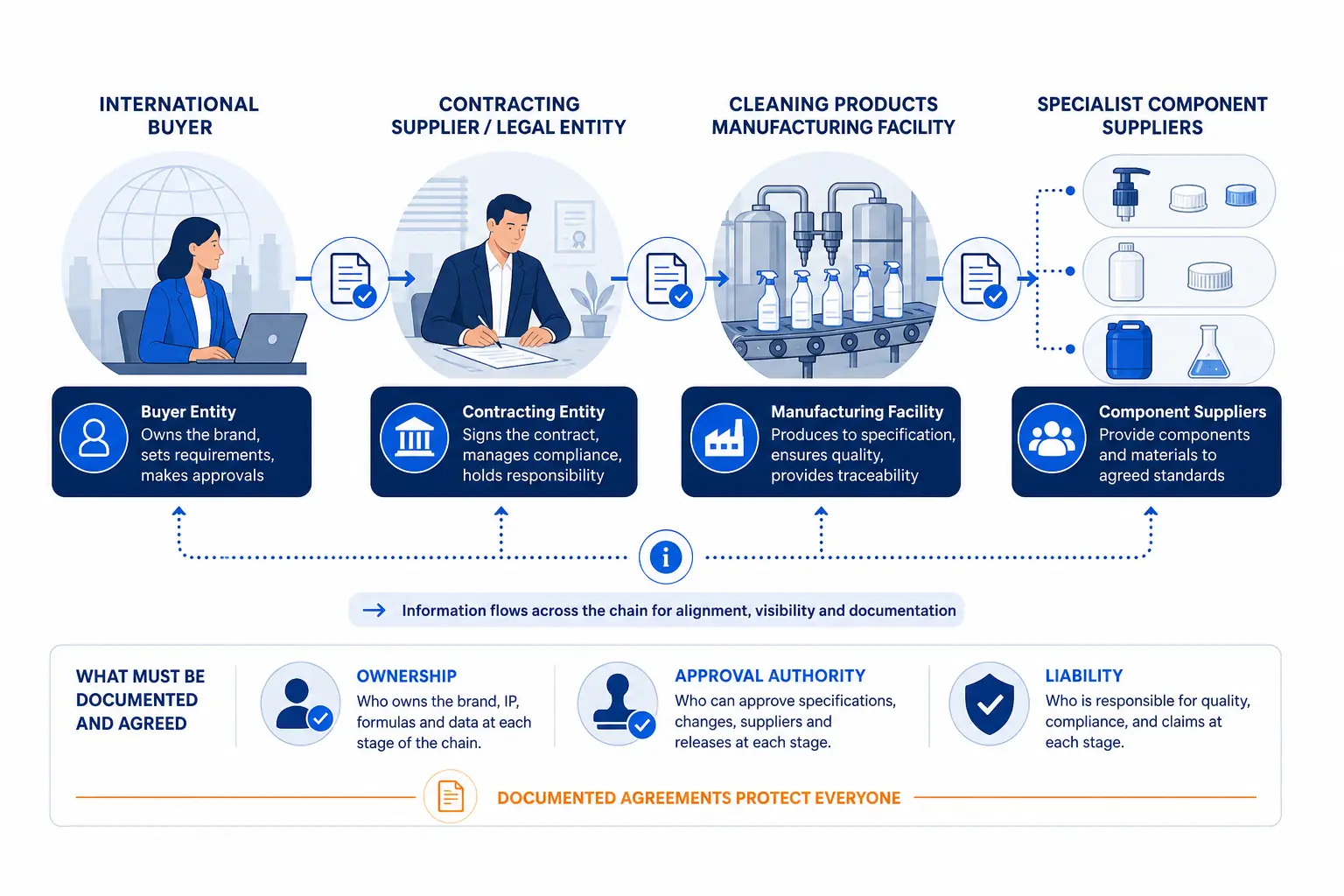
A factory perspective
This checklist was written from the perspective of a Chinese manufacturer involved in product development, formulation, tooling, filling and packaging coordination.
Our experience has taught us that buyers rarely suffer because a supplier could not answer a technical question. The more expensive problems begin when ownership, approval authority and responsibility were never made explicit.
Whether you work directly with a factory or through a trading company, those are the questions worth resolving before production begins.
This article provides general supplier-verification information and does not constitute legal advice. Contract, intellectual-property and compliance requirements should be reviewed for the relevant transaction and market.
Published
· Updated
· Reviewed annually
Send us your product reference, target quantity or initial brief. We can help define the next step and identify what is needed for an initial quotation.